It seems like it has been a long time since I posted about birds. Such is the middle of summer. It gets hard to find new birds for my list. I did finally manage to creep up to 120 birds this week.
On June 20th I added two birds. I added the clay-colored sparrow and a blue-winged warbler. I was one of the few people at work that day and no one had gotten the mail yet so I hiked out to the mailbox. I spotted a blue-winged warbler along the driveway on the way to the mailbox. Rule number one. Always bring binoculars, everywhere.
On the way back I cut through the prairie/savanna restoration and could hear the distinctive call of the clay colored sparrow. Paul had taught it to me earlier in the month and while I had heard it everywhere the actual birds had eluded me. Sitting on top of a big slash pile was a little brown bird. With my binoculars I thought I could tell it was the one singing. I crept closer and sure enough it was the clay-colored sparrow.
The nest week was the first week of summer camp and I lead a trip of kids down the St. Croix river. The first night we heard but didn't see a whip-poor-will. The second night we camped out at Goose Creek and a pair of sandhill cranes flew right over our heads. They landed on the opposite shore to eat. We got a great view. As I remembered, the goose creek campsite is thick with American redstarts and the wood thrushes were singing beautifully from the woods. The second morning (June 29th) I arose early and birded along the quiet shore as mist lifted off the water. I saw another blue-winged warbler but there was another bird hanging out with it. I finally got a good luck and to my delight it was a golden-winged warbler. There was another misc. vireo about that morning. It looked like it was probably a red-eyed vireo but I'm going to hold off on counting it since I didn't get a great look.
Bird 120 was a pleasant surprise. I don't get to add many birds to my list from my treeless suburban back yard. I've done a lot to encourage birds including feeders and a new pond. The improvements have brought in cardinals, robins, house sparrows, chickadees, goldfinches, and chipping sparrows but I kept on saying where the hell are the house wrens! I have two next boxes up that would be suitable but I don't so much as see a single sign of the wrens. Then, just the other day (July 15th)there were two of them hanging out on my back porch and playing around in the mulberry bush. Believe it or not they were the first ones I had seen all year. I really hope they see what a nice place my yard is and decide to stick around.
Woo hoo, 120 birds. I'm going to beat last year.
117 Clay-colored sparrow,
118 Blue winged warbler
119 Golden-winged warbler
120 House Wren
~Kirk
Tuesday, July 17, 2007
Would you believe birds?


Wednesday, July 11, 2007
Something Skinky

While out in the bog with the kids in the photography class I'm teaching we found a skink at the last minute. We didn't have much time before we had to be back to the building but I managed to snap a quick picture of this elusive creature. Most people don't realize that we have lizards in Minnesota and might mistake a skink for a small snake. We actually have three species. We have the five-lined skink, the northern prairie skink and the six-lined racerunner. I am pretty sure this is a northern prairie skink.
~Kirk
Monday, July 02, 2007
Open Letter Calling for Impeachment, Conviction
This is the full text of the letter I just sent to my representative in the House of Representatives, Betty McCollum.
That's my letter. Where's yours?
Dear Representative McCollum.
This evening I learned that President Bush commuted the jail sentence of I. Lewis "Scooter" Libby. In doing so he insults the Congress and circumvents the independence of the judiciary. While he has the right to pardon as President, he must also answer for the actions he chooses to take.
While I have not called for it in the past, I now request as my representative that you draft articles of impeachment for George W. Bush as he is not fit to be President of the United States and has certainly committed "high crimes and misdemeanors". I ask that you do so in a timely manor so that the Senate can vote to convict. I believe you would be able to secure a simple majority of representatives to support this effort.
The President and his staff intentionally misled and defrauded Congress with regard to invading Iraq in violation of Title 18, United States Code, Section 371. He also conspired to commit torture of prisoners in violation of the "Federal Torture Act" Title 18 United States Code, Section 113C. He has also openly admitted to ordering the NSA to illegally wiretap American citizens in violation of Title 50 United States Code, Section 1805.
These are all impeachable offenses, in fact, violation of Title 18 United States Code, Section 113C is actually punishable by death so it surely qualifies as a "high crime."
Your predecessors in the House impeached President Clinton for far lesser charges and I ask that you do your duty to begin the removal of an unfit, criminal president who flaunts the laws of our country and believes he and his friends are immune from the law.
Next up, a letter to my Senator asking to convict when the articles of impeachment are sent to the senate.
~Kirk
Wednesday, June 20, 2007
How can I not be called Cute?

Someone recently tried to convince me that opossums are not cute. In fact, I believe they said they were ugly. Here's a picture I took of an opossum in February of 2004. How can anyone say this isn't a totally adorable animal?
~Kirk
Monday, June 18, 2007
End of an Era

I was really saddened this weekend to hear that Don Herbert passed away. For those not as geeky as me, that's Mr. Wizard. I used to watch Mr. Wizard's World on Nickelodeon as a child and he seemed old then! Don Herbert taught science to so many people and got so many kids excited about science it boggles the mind. I remember so many things I learned from that show. He taught concepts in such fun ways. Here are a few highlights I remember off the top of my head.
I remember he taught how flour mills explode by putting a birthday candle in a paint can, feeding a tube into the side of the can, putting a small pile of flour just inside the hole, lighting the candle and then putting on the lid. When he blew into the tube it filled the air in the can with tiny particles of flour which caused the top of the can to explosively blow off when the candle lit them on fire.
I remember him demonstrating air pressure by filling a large can with hot air and then submerging it in cold water. The change in air pressure as the air inside cooled crushed the can.
I remember him picking up a bolt off the bottom of a fish tank and not getting his hand wet because he dusted the surface of the water with yellow powder (I think from a butterfly's wings.)
I remember him seeing how large a column of water could be sucked up a tube strung up the side of an apartment building(again to demonstrate air pressure.)
I remember him cutting a banana without peeling it.
I remember him showing how to play a record with a foam cup and a straight pin.
I remember him showing how to measure the height of a tree with a pie tin and water. (and algebra)
I remember him drawing the space shuttle on a computer with very early computer graphics.
I remember him teaching about fiber optics by putting a flashlight into a black paint can and punching a hole in the side. The water arched out and acted like fiber optics bending the light from the flashlight onto the spot where the water hit.
I remember him showing air flow from cold to warm with some dry ice, regular ice, a lamp and an aquarium.
I remember him calculating the speed of sound with a starter pistol, a stop watch and a walkie talkie.
I remember him teaching about nerves with pins taped to a meter stick.
I remember him making a come-back can.
I remember him cutting a small piece of paper so that you could walk through it.
I remember him challenging someone to fold a piece of paper in half eight times. ( I can't be done, go ahead and try it.)
I remember him breaking a meter stick by putting a piece of newspaper on top and hitting the end, the air pressure on the paper is so great the stick snaps.
I remember the challenge to blow over a little folded piece of paper.
I remember the turning window optical illusion.
I remember him playing music on the rim of glasses.
I remember him getting an egg or ball or something into a cup by knocking a block out between them with a broom.
I remember him keeping water in an inverted glass with a playing card.
i remember him making a mobius strip.
I remember him lighting steel wool on fire.
I remember him showing how a siren works.
I remember him making secret writing with lemon juice.
I remember him showing how to tell if an egg is raw or hard boiled by spinning it.
I remember him showing how to flip a spoon into a glass.
I remember him teaching about adhesion and cohesion in water by pouring water along a string.
Most of all I remember him as a man who was always willing to teach kids about science and make it fun. He explained it in a way that everyone could understand and he didn't have to resort to fancy computer graphics and the like. He used simple language, simple drawings and everyday objects. It is a lesson that sticks with me to this day and I try to teach like him every chance I get.
When I was in elementary school, a teacher asked me to write about a hero of mine. I didn't have any hero's then and I don't now. I think the concept is silly. I do have role models though that I respect greatly and Don Herbert is one of the greatest of my life. I never gave it much thought but I'm sure he was one of the people responsible for making me the hands-on teacher I am today.
He will be sorely missed but he his influence will never be gone.
~Kirk
Thursday, June 14, 2007
2007 Birds 111-116
I'm slowing adding birds at this point. They are getting harder and harder to find. The trees are thick with leaves and I've spotted many of the common birds already. On Memorial Day I walked around Lake Como with Chelsey and Odin. Near the spit of land that juts out into the lake I heard a warbling call and soon spotted a little bird flitting around in the bushes. the call sounded familiar and as I tried to match it up to a mnemonic it suddenly hit me. "I'll hug you and squish you and squeeze you till you squirt." Who could forget that one! It was a warbling vireo. Not a flashy bird but the call makes up for that. Coincidence?
On Saturday, June 9th I started the day out teaching a fossil hunting class at Lilydale Regional Park in St. Paul. While I waited for participants in the dirt patch that passes for a parking lot I heard a call and grabbed my small binocs out of the trunk. It was a first year male American redstart. I wish it was a mature male as then it would have been red instead of yellow. I'm going to count this as my first sighting of they year. I saw one from really far away in the bog at work earlier in the season but this was a much better sighting. Later that same day I went out on a hike with Paul over to the farmstead across the road from the nature center to look for birds during a BioBlitz at work. We spotted warbling vireos there too and we could even see that they had been banded.
June 11th, Paul and I ate lunch quickly and then headed out for a quick drive to look for a bobolink where he had spotted one earlier. We didn't see any there but did see a bunch of Eastern meadowlarks. We did finally catch a glimpse of a bobolink and hear the call near the corner of Norell and co rd. 4. That's a rich corner!
June 13th Paul, Julia and I headed out to the bog at Warner for a short hike. We actually wanted to see if there were any northern waterthrushs but we heard something else instead. We soon found a bird up in a tree at the south end that from behind we thought might be a red-eyed vireo. When it turned around though we caught a spectacular view of a yellow-throated vireo. It was simply beautiful.
Later in the day on June 13th we went canoing on Lake Terrapin to train in some staff on procedures and up at the top of the lake we spotted a pair of loons with two babies. Great stuff. The babies were riding on their parents backs. I had heard loons all spring but this was weirdly my first sighting.
Finally, rounding out the list is the simple and beautiful blue-grey gnatcatcher. Today, June 14th, Paul pointed them out at the very beginning of the work day as a bunch of them were hanging out right by the parking area at work.
REVISION
I listed Fox Sparrow Twice so I started re-numbering down by 1 with this post.
111 Warbling vireo
112 American redstart
113 Bobolink
114 Yellow-throated vireo
115 Common loon
116 Blue-grey gnatcatcher
Friday, June 08, 2007

Tuesday, June 05, 2007
Abandoning Google
I'm pretty much ready to abandon Google at this point. Their search functionality is almost gone as advertisers and spammers are getting better at figuring out how to get higher and higher ranking. Search results are littered with junk sites that have no relevance to your search. They are simply generic sites with your keyword thrown in and then links to junk articles.
Same story over a yahoo. Are there any actual search engines that work out there anymore?
~Kirk
Friday, May 25, 2007
Pewee, Bunting and a Swamp Bandit.
Monday, May 21st I went into the kitchen at work and since the window was open I could hear the Eastern Wood Pewee taunting me. I grabbed some binoculars out of my cubicle and within a few minutes I located him perched at the top of an old oak tree on some bare branches.
Tuesday, May 22nd I heard a loud bird call in the same area as the Pewee. The call was quite loud and vaguely familiar. I saw a small bird flitting around in the top of the large oak tree by the garage. I took some binoculars out of the van and peered upwards. Sure enough, it was the Indigo Bunting! I missed them all last year so I was very excited to add one to my list for 2007.
Friday, May 25th I helped Paul set up mist nets for birds class and then hiked back to the building via the meadow. I trained my binoculars on the piles of box elder we cut to create a bur oak savanna. I saw a small bird right away on a pile far away. I had to get closer to be sure but it was indeed a common yellow throat. I expected to see the "swamp bandit" closer to water. I hiked back to the building noting kildeer in the newly plowed field and pulled three deer ticks off my pants. Good times.
In the afternoon I stopped out as Paul took down nets and the bog was quite quiet. A lone bird flew along the tree tops and when it landed we got a great view of a Great Crested Flycatcher with a beautiful creamy yellow belly.
108 Eastern Wood Pewee
109 Indigo Bunting
110 Common Yellowthroat
111 Great Crested Flycatcher
Saturday, May 19, 2007
Birds and Bugs
I taught a bug class out at Lake Elmo Park reserve today. That was at 1:00 and it went until about 1:45. I didn't actually leave the park until about 3:45 as I did two hours of birding after the program. I really hadn't eaten anything but a lot of milk and half a bag of goldfish crackers so I was really hungry by the time I left.
I drove all over the park looking for birds. I started at the amphitheater where I did my program. I spotted a yellow warbler. The first one of the year in Minnesota but I had seen them in Arizona in March. There were red-winged blackbirds everywhere and some common grackles as well as robins, belted kingfishers and a northern cardinal who landed on both sides of my car to inspect my mirrors. In the water was a great blue heron, Canada geese, mallards and some kind of merganser. I heard a common yellow-throat but couldn't find it. I also spotted a little bird that drove me crazy. I think it may have been a vireo. Who knows. It was grey on the back and a little yellow on the belly with a eye ring but no distinct wing bars. I had the national geographic book with me and the more I use it the less I like it.
From there I headed out of the modern campground but quickly pulled over when a flash of yellow flew past my car. I thought it was another yellow warbler, maybe it was but all I saw was an American goldfinch. I poked around that area a bit and spotted a grey catbird on the ground under some bushes. Tally ho!
I next headed to the swimming beach which was closed but a small wetland between the beach and the playground was full of birds. I tried not to look creepy hanging out near a playground with binoculars. I got some more good views of many yellow warblers and barn swallows before there was a flash of orange. Baltimore Orioles! A male and female were working over a large grapevine. Tally ho! (yes I know I'm a dork for using that term but hey, it was good enough for Peterson.)
I next tried the fishing dock and on the way down I spotted a rose breasted grosbeak. Next stop was the primitive campground. As I hiked in I noticed that I had hit my sandaled feet on a fallen branch earlier and my foot was bleeding badly and about of the bottom of my right foot was covered in blood. Hmm. How did I miss that? A band aid to the rescue and I was back birding for a beautiful view of a field sparrow. Gorgeous in a subtle way.
I pushed off into the woods toward the first campsite and watched an egret in breeding plumage for a while. I could hear an eastern wood pewee taunting from nearby so I tried to investigate. A solid wall of buckthorn blocked my path.
I scanned a large oak in the direction of the pewee in a vain attempt to spot him. No luck but a lump on the branch caught my eye. It was either a whip-or-will or a nighthawk. Arhhh! Which one? I slowly worked my way twenty feet though a buckthorn thicket until I could just make out a white spot on the fank of the bird. Nighthawk for sure.
I poked around near eagle point lake but I was getting tired and a close call with poison ivy while trying again in vain to spot a common yellow throat told me to call it a day and get some food.
Here be the yearly bird list additions:
(I had spotted a rose breasted grosbeak at work a week ago but somehow it never made it on the list so I'm adding it now)
104 Rose Breasted Grosbeak
105 Gray Catbird
106 Baltimore Oriole
107 Common nighthawk
Wednesday, May 16, 2007
Birds and Orchids

Today I hiked down to the lake with fellow naturalist Paul Smithson. The day was cool and the birds weren't too active. The fully leafed out trees didn't help either. We did spot a Swainson's Thrush and earlier I had seen a Ruby-throated hummingbird. I spotted the bird at the feeders we put out. I watched from Warner's new cafe seating bird watching area in the new exhibit hall. It was fantastic to chomp down lunch and watch birds. The ready supply of binoculars in slots under the counter was wonderful as well. I had seen a hummer caught in a mist net while bird banding earlier in the week which doesn't count for my list so it was nice to see one that I can count.
On out way back from the lake we discovered that the yellow lady slippers are blooming. The photo at the top of the post is actually from last year as I haven't gotten a chance to photograph them this year yet.
As far as birds go I need to find myself my old nemesis the indigo bunting. I never did see one last year and now I see these great photos over on the birdchick blog. Okay, show yourselves!
Bird Count to Date:
102 Ruby-throated hummingbird
103 Swainson's Thrush
Monday, May 14, 2007
101 birds of 2007
Here we are. Take in a big deep breath. I have passed 100 birds for 2007. I know any serious Birder is thinking right now, "it took you till May to get 100 birds? Slacker." Ya well, I'm new to the whole bird thing and other things like having a sick dog kind of consumes all my time. This sure is a lot earlier than I got 100 birds last year though!
Bird 96 was a brown headed cowbird. Two points to make here. First off, why isn't it called a brown headed bison bird? Second, why does everyone hate this bird? I know people who kill them if they see them. Keep in mind, this isn't an exotic species like a house sparrow. Brown headed cow birds are nest parasitizers. Okay, well redhead ducks parasitize mallard nests. Should we kill the redheads ducks too? The problem is that cow birds are an edge species and humans love creating edge everywhere so we're increasing the cow bird population.
Monday night was the MNA board meeting and we met at Lebanon Hills. The meeting went long and the sun had set by the time we left the building. The fun thing about hanging out with a bunch of naturalists is that everyone is pretty keyed into their surroundings. Within a few steps of leaving the building, one word was on everyone's minds.
Woodcocks.
We could hear "peents" coming from the foggy netherworld around us. Where was the bird? It seemed to come from all directions. Soon we could hear the chirpy wing beats of the rotund little bird zooming around overhead. As we strained to see it we heard more peenting and realized there were multiple birds out doing the sky dance. I'm going to conservatively say three birds but four is probably safe and I would not be surprised to find more. This is in contrast to my experience out at Warner where I work. When we have woodcocks it tends to be just one. My guess is that in a more rural setting where there is more land, the woodcocks are more likely to back down in response to challenges from other males. There are plenty of other places to go. Closer to the city, the woodcocks are less likely to back down as there are no other suitable sites and thus the makes defend a smaller dancing ground. This is just wild speculation on my part.
We spotted several birds flying overhead and eventually ran into the field in the dark to get a good hiding spot to try to see him on the ground. It was too dark already but one time he did hand very close. We could hear him do his little hiccup inhale before the really loud PEENT!.
On Tuesday May 8th I opened my window at work and heard a familiar call I hadn't heard since last year. What is that? Oh course, the eastern wood pewee. I also heard ovenbirds so I needed to head outside to spot them. I had a few things to check on outside at various times during the day and I took my binoculars which ensured that I never say any birds. I did also hear a wood thrush and a great crested flycatcher.
Thursday, May 10th I finally saw chimney swifts. I had heard them earlier so it was nice to finally spot them. I saw them while eating lunch on the deck at work.
I took Friday, May 11th of from work and I was pretty much homebound taking care of the dog. I did spend some time in the yard and spotted a sole goldfinch on my goldfinch feeder. I put this feeder up in December so it is about time someone found it! Hopefully more will be back. There are also regular house and fox sparrows visiting the yard and chimney swifts flying over the house.
On Saturday I heard my first swamp bandits of the year a.k.a. common yellow throats. As I was with a girl scout troop teaching canoing I couldn't break away to spot the bird. I also heard some sort of vireo and yellow warblers. Ahhh, all this hearing and no seeing make Kirk a grumpy boy.
Sunday, May 13th was Mothers Day and I spotted Barn Swallows in the parking lot of Interlachen Country Club.
Monday May 14th was a wild day. It started off when four of us from work, Me, Julie, Julia and Bekah carpooled. On the overpass from Hwy 36 to 35E northbound some idiot came out of nowhere going way too fast and sideswiped Julie's car. We pulled over, called the police and waited. It took a long time for the hwy patrol to fill out the paperwork and I joked that Julie should have gotten in an accident in better bird habitat. Just after I said that Julia spotted a bird sitting on some long grass in the middle of the cloverleaf interchange. She grabbed her binoculars and sure enough, it was an Eastern kingbird. We all passed the binos around and I realized it was bird number 100 for me for the year. So I guess at least one positive thing came out of a bad situation.
Once at work we set out bird banding. We caught a yellow-bellied flycatcher, a catbird, a ruby-throated hummingbird, a common yellowthroat, and two female American redstarts. We didn't have many nets set and they weren't up long as it was just a training session. I don't count any birds from the nets for my bird count as that seems like cheating. I did, however, see a beautiful scarlet tanager up at the top of the trees behind the building. That's 101 birds. We had to call it early to head home so Julie could go to the doctor to make sure her baby was alright after the accident so we didn't go down to the lake for lunch as planned. I'm sure I would have added a handful more birds. Maybe later in the week. It feels good to be over 100 though!
96 Brown Headed Cowbird
97 American Woodcock
98 Chimney Swift
99 Barn Swallow
100 Eastern Kingbird
101 Scarlet Tanager
Friday, May 11, 2007
Thar She Blows!
This is the best clip of video I've seen in a long time. I'm so happy to have stumbled upon it and so happy to share it with you. Behold the power of nature. Ahh let's hear it for storm surges and under-sized storm sewers.
It is actually two clips put together, I love when the guy starts to run in the second half. I'd run like hell too. Apparently is this MN-DOT footage from a storm in July of 1999. The overpass is 35th street on Hwy 35W.
Monday, May 07, 2007
Phoebe Nest Camera
This is really exciting. Warner Nature Center is part of a birdhouse network program with Cornell Lab of Ornithology and last week we installed a nest camera on an Eastern Phoebe nest. The image above is a live image of the nest. If the phoebe is on it you can see her while if she is away feeding you can see there are five eggs. If you are viewing this later in the summer it may show the young as well. If you viewing this years down the road I have no idea what will show up. The camera uses infrared lights so we can keep track of the nest at night as well.
The image is refreshed every 30 seconds though you'll have to refresh your browser page to see it. The way I have it set up here it just grabs the current picture when you visit the blog.
This camera is unique as we have the only camera in the program that is on a "wild" nest. All the other cameras are in nest boxes.
You can visit the cornell website for captured highlights from the season.
~Kirk

Saturday, April 28, 2007
Spring Preview

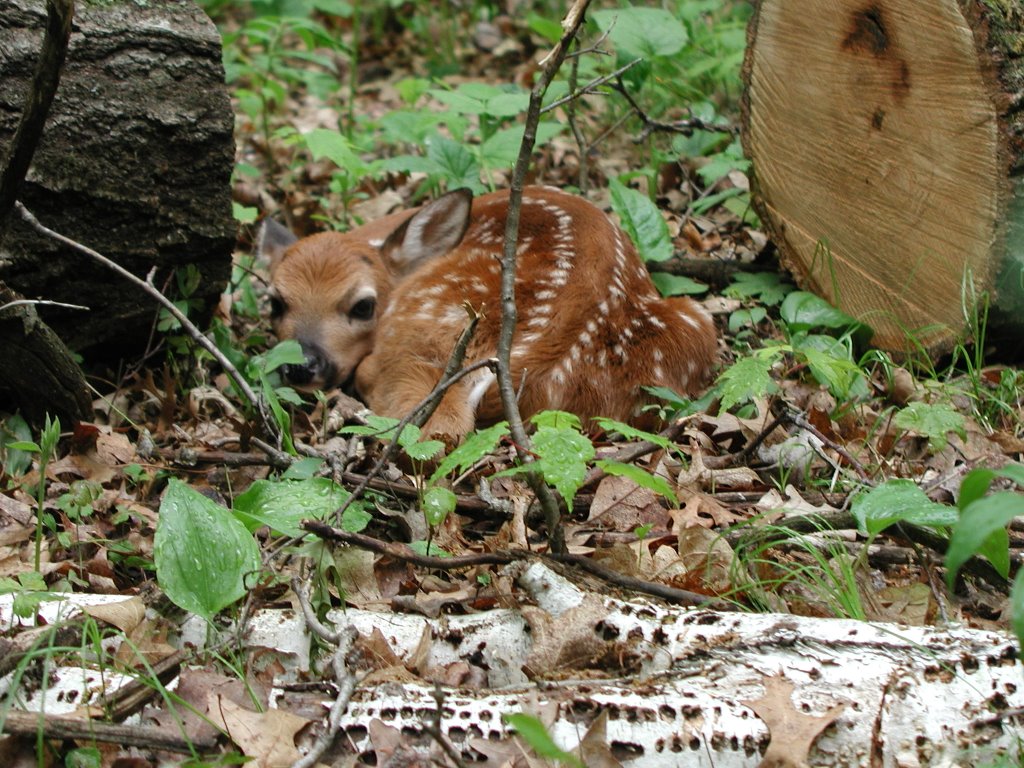
Here's a couple photos to brighten your day. I actually took these photos last May. Our site manager happened upon a fawn while clearing some downed trees. The fawn was wonderfully hidden between two logs just a few feet off our driveway. This fallen tree was cut into sections a few weeks ago and the deer was hiding between two sections. It was a great hiding place. At the bottom of the second photo is a fallen paper birch with sap sucker holes in it. The pattern on the deer's back beautifully resembles the woodpecker's holes. Fawns are usually moved by their mothers to different hiding spots twice a day. This fawn is likely only a few days old. It was only a little bigger than a house cat.
~Kirk
Friday, April 27, 2007
A Lunchtime Word Rant
Please allow me to get my writers geek on for a moment.
Chelsey pointed out to me today that the abomination of a word, disorientate, is in the dictionary. Here's some links.
http://www.thefreedictionary.com/disorientate
http://dictionary.reference.com/browse/disorientate
http://www.merriamwebster.com/dictionary/disorientate
I assume it is in the OED as well but I don't have a 20 volume copy handy and I don't have an online subscription.
Coming from a line of teachers and writers, I learned some time after finishing Dick and Jane that if Spot is lost he is disoriented not disorientated. Disorientate is a vulgar, pointless word.
The Columbia Guide to Standard American English says they are synonyms and both valid words but also says that those, "who seek conciseness and dislike polysyllables prefer disorient and argue that disorientate is both ugly and unnecessary."
Well, I have news for the Columbia Guide folks, disorient is polysyllabic too but, yes, disorientate is both ugly and unnecessary.
Look people, irregardless is in the dictionary too and so is ain't. Just because a word is in the dictionary doesn't mean you don't sound like and idiot when you use it.
~Kirk
Thursday, April 26, 2007
Exo-planets

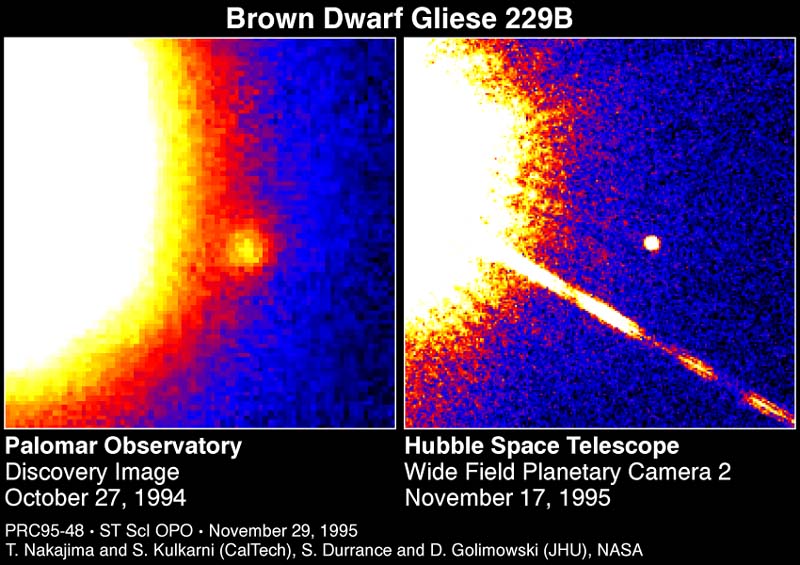
I was absolutely stunned yesterday when I heard the news that astronomers have found an earth-like exoplanet. Well, maybe not earth-like but a rocky planet in the habitable zone around a star. An exoplanet is a planet orbiting around a star other than our sun. When I was a kid this was purely the stuff of science fiction. We figured there were other planets but we couldn't prove it. In 1992, astronomers first detected a planet around another star. Mind you, they didn't see the planet, they merely detected it was there by how it affected the light from the star. This was exciting news. In 1994 astronomers announced that for the first time they had imaged an exoplanet. This really blew my mind because I knew we were talking about relatively small objects that were almost unfathomable distances away.
Not life as we know it Jim As exciting as these announcements were, the planets they discovered could not possibly contain, in the words of Dr. McCoy, "Life as we know it"." This is because the planets they discovered were what astronomers called "Hot Jupiters" We consider Jupiter to be a giant but these planets were even bigger. They were almost more failed stars than planets. The fact that they were so large is what made them detectable. These are nasty hot places. If they contain life it certainly isn't like anything we know.
All of this leads up to the announcement made recently about a planet orbiting the star Gliese 581 in the constellation Libra. Astronomers could detect it because it is big, about 5 times the size of Earth. This is certainly big but not enormous or even giant. Keep in mind that 1,400 earths can fit inside Jupiter.
The really exciting thing about it models suggest the planet may be made of rock and not of gas which makes it more like home. Also, given the distance from the star, astronomers calculate the surface temperatures could range from 32 to 104 degrees Fahrenheit. Again, sounds a lot like Earth. The news is exciting. I'm not sure how they came up with this number but if it is based purely on the size of the planet and distance from the sun I'm a little skeptical. Look at the Earth and Venus. Fairly similar size, Venus is a little closer to the sun but it also has green house gasses from hell and so the temperature there is way hotter than one would expect merely from the distance it is from the sun. the surface temperature is over 800 degrees Fahrenheit! In theory, if the atmosphere if Venus were more like Earth it might be more hospitable to life.
This comparison of rocky planets is a good thing to consider. We have four rocky worlds in our solar system. Mercury, Venus, Earth and Mars. Mercury is way too close to the sun but the other three might within the range for life. So, in our solar system we're looking at a 70% chance that life won't arise on a planet deemed suitable purely on distance. (There's still a possibility of life on some Jovian moons as well)
There's a lot we don't know and we're discovering more each day. It is an exciting time to be alive.
As a final note, this planet is 20 light years away (relatively close in the grand scheme of things) which means if there is intelligent life there they could be picking up our television and radio signals from 1987. Of course, we'd be picking up their signals from 20 years ago as well so unless they don't use broadcasting of any kind there likely isn't any intelligent life there or we would detect signals when we look at the star with radio telescopes.
Tuesday, April 24, 2007
Birding Adventures (91-95)
Thursday, April 19th while coming back from an outreach program I saw a bird fly across county road 4 as I approached the corner of Norell ave. I caught a glimpse of yellow and thought to myself, hmm, Eastern Meadowlark? As I turned onto Norell I slowed down when I saw a bird sitting up on the telephone line. I sat forward in my seat and sure enough, sitting up on the wire with a bright yellow breast and a black neck was an Eastern Meadowlark.
At Warner Nature Center on Saturday the 21st I checked out the feeders before teaching a Plants class for brownie girl scouts and and I spied a couple of white throated sparrows.
Sunday was Earth Day and I worked in the morning deadheading plants and removing winter cover. My friend Awe came over to help. As we stood near the pond, a small bird came in and landed. It was a chipping sparrow. It isn't too often I get to add a new species to the yearly list from by pathetic yard but I guess anything can happen on Earth Day.
Tuesday the 24th I stopped off at Lake McKusick in Stillwater on the way to work as I was working late that day so I had the morning off. I quickly spotted common grackles and hundreds of red winged black birds. I also saw canada geese and 4 or 5 american coots. A man passing by asked me if I had seen the Myrtles. I hadn't. He said they had arrived yesterday. A little looking and sure enough I spotted a yellow rumped (myrtle) warbler.
( I later learned from Paul who lives near McKusick that the myrtle warblers have been there about a week)
91 Eastern Meadowlark
92 White Throated Sparrow
93 Chipping Sparrow
94 Common Grackle
95 Yellow Rumped Warbler (Myrtle)
Friday, April 20, 2007
Ecological Discourse and the Nature of Meaning
(Here's some really long musings for Earth Day)
Back around 1998 or so I met weekly with some friends at Lori's Coffeehouse for what we finally came to call the Cultural Inventors Collective. Believe me, these were people who loved ideas and there were several get-togethers discussing why we felt the need to assign ourselves a name. That's a different story.
On a slightly balmy spring evening, we moved outside once Lori's closed. As we sat back on the grass looking up at the moon, I thought back to when I was a child looking up at the stars. As I stared at that same moon that had gotten me though so many nights I began to think about the nature of meaning. The topic was near to heart as one of my friends who was present was grappling with the issue of meaning in her own life. She was having a crisis of meaning.
Her spiritual path was Buddhism and her educational path was Cultural Studies. She told me that Buddhism teaches that meaning inherently exists and because she believed her teachings, it was so. Likewise, Cultural Studies teaches that meaning is not inherent but rather is a product of (or is created by) discourse and because she believed her teachings, it was so.
One of my favorite Zen sayings is:
If we understand,
things are just as they are
If we do not understand,
things are just as they are.
I guess we could have left it at that but we didn't. I felt the need to show that these two ideas are really the same. Discourse does create meaning but it can do so in a way that fundamentally springs forth from the inherent properties that exist in the world. That meaning is there whether a human bothers to ponder it or not.
Meaning According to Cultural Studies
The premise of meaning as defined by cultural studies academics is that discourse about existing texts, or discourse which creates new texts (though the two are not necessarily mutually exclusive) create meaning. This is a very general description. To be clearer, discourse creates meaning and a text is the record of that created and possibly shared meaning.
As my friend tried to explain the above to me and as we discussed the nature of meaning it became clear that this was at the very root of her spiritual crisis. The idea of meaning being created exclusively through discourse seemed to contradict her spiritual teachings with regard to the inherent nature of meaning in the universe. The Cultural Studies definition clearly states that meaning is not an inherent property in the universe but rather created and that the specific creative process is discourse.
I’ve gone to the trouble to lay out the cultural studies model because it so closely follows the cultural views of one particular culture, that being our scientifically driven “western” culture. We have an anthropocentric view of the nature of meaning. i.e. meaning is constructed and that construction is by humans. The idea is that we create meaning in the world though our language and since only we use language, we create and are in charge of all the meaning in the world.
Pushing Boundaries
Q. Is meaning created or inherent?
The answer is clear.
A. Yes.
How can it be both? Yes as an answer makes sense from an eco-centric rather than human-centric perspective.
In order to understand the dual nature of meaning we must examine the concept of text. Text is the link between discourse and meaning. It is the result of discourse and it is from texts that meaning is divined (according to cultural studies). Cultural studies views texts in the literal sense of a written document but also words that could be written down in such a form. I submit that discourse can be nonverbal, and can occur without conscious intent to do so.
I’ve now strayed beyond where the traditionalist Cultural Studies students will usually tread but I think most are still along for the ride. My friend begrudgingly came at least this far. It seems logical, though a bit unorthodox, to assume that a nonverbal discourse creates both text and meaning. If this were not the case the game of charades would be utterly unimaginable and mimes would be even less comprehensible than they already are.
This next leap of logic will lose all of the traditionalists who may have indulged in idle curiosity up until this point.
Discourse, both conscious and non-conscious can occur between two or more humans, between humans and non-human animals, between animals (humans included) and "inanimate" objects, and even (take a deep breath) between two inanimate objects. (Though according to my own definition there really is no such thing as an inanimate object since everything constantly interacts, albeit sometimes subtly, with everything else and as such is animate.)
In this context, let us say that an animate world is one in which all things partake in discourse. This discourse creates readable texts and these texts, since they are derived from discourse, form the basis of meaning.
When I walk outside, the world is full of meaning. To say the meaning is inherent is perhaps shy of the target. I am not sure the meaning is so much inherent, more that meaning inherently exists in a general sense since the discourse never stops. See the subtle difference? In the end, the difference may be of little consequence.
When two humans come to a conversation they bring with them the makings of discourse that can, in a general sense, be called properties. It is the interaction of these properties that craft the nature of the text that is created through discourse between the two humans. If we change the properties of the humans then the resulting text is changed. For example, if we change say one person's religion, i.e. beliefs, i.e. properties, then we may see a change in the text as the discourse will be different.
Ah, but physical properties change the discourse and resulting text as well. If I change the sex of one of the people then the discourse will most likely be changed and as a result, we have a different text.
Human to Human Verbal Discourse
Now, if I get into an intellectual fight with a person, I submit to you that this is a discourse and we will create a text as a result. To be very concrete about it let us say the text is an actual transcript of our words. This is the traditional model.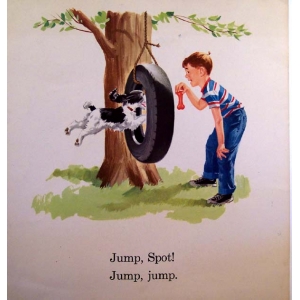 Human to Human Non-Verbal Discourse
Now, if I get into a physical fight with a person, I submit to you that this is a discourse and we will create a text as a result. To be very concrete about it let us say that the resulting "text" is a series of cuts on each other, scuffs on the dirt and maybe, just to be extravagant about it, some shed blood on the ground. This is truly a text as we can come by and “read" it and understand meaning, i.e. some sort of fight took place here. Sure, not mind blowing meaning but Dick and Jane books aren't mind blowing texts either.
Human to Animal Non-Verbal Discourse
Now, if I get into a physical fight with a rabid fox, I submit to you that this is a discourse just a surely as the above example and we will create a text as a result. To be very concrete about it let us say that the resulting "text" is a series of cuts on each other, scuffs on the dirt and maybe, just to be extravagant about it, some shed blood on the ground. The result is a text as surely as it is in the above example.
Animal to Animal Non-Verbal Discourse If you accept that a human fighting a human creates a text and that we can substitute a fox for one of the humans and still create a text then why not submit a fox for the other human as well? I submit that the same paragraph could read "if a fox got into a physical fight with a fox. . ." (photograph by Robert Weselmann)
Here’s where we go into the realm of the supposedly “inanimate objects” We have thus far established that two animate objects, both bringing properties, can meet and have an interaction which we will call a discourse. It may be a non-verbal discourse but a discourse none the less. This discourse, like all discourses, will create a text, even if that text is a simple as a few marks on the ground. I ask you to consider the following. "Inanimate" to "Inanimate" Non-verbal Discourse
If wind, in the form of a tornado, has a "fight"or interaction with a landscape, I submit to you that there will be an interaction between the properties of the tornado and the properties of the land. This fits our definition of a discourse. Two physical entities come together, both bringing properties, they interact (discourse) and the result is a text. To be very concrete about it let us say that the resulting "text" is a huge path of destruction. The text on a grand scale simply reads, a tornado came through here.
When humans read this text, they can see the inherent meaning that exists because of that text but also create new meaning based upon it. The text may say this was a very strong tornado, to say that it was an"F5 rating" tornado is to ascribe human meaning and classification on top of existing meaning. The existing meaning was “inherently” there as it was created before we arrived through the natural workings of the dynamic earth.
You could say my argument is, if a tree falls in the woods and no humans are there to see it happen does it still mean something? Of course it does!
A World of Meanings and Texts
In my line of work as a naturalist, everything is a text. There is meaning already existing in those texts. Our discourse of those texts creates further meaning, for sure, but that does not negate the inherent nature of the meaning already there. I hear the meaning in the Phoebe's call, I hear the meaning in the warning call of the chickadee. I see the meaning in cumulonimbus clouds.
Q. Is meaning created or inherent?
The answer is clear.
A. Yes.
Tuesday, April 17, 2007
Birds 81-90
Bird 81 was an Egret on Easter. I spotted a bunch of Buffleheads during my commute to work on Tuesday, April 10th. I thought I caught a glimpse of a Northern Shoveler that same morning but it was just a glimpse at 55 mph so an official sighting will have to wait.
On Thursday April 12th I went on a hike with our intern Julia. We saw a winter wren down in the moat of the bog. We followed it around for a while. The ID would have been about 1000 times easier if it had bothered to sing. I next spotted a yellow-bellied sap sucker which was cool. It was on Red oak trail near the SE corner of the bog. It looked a lot like a hairy woodpecker at first but the white spot on the back of the head and the white stripe on the side really stood out. Julia said she noticed the white line running off the side of the head like a pileated. The yellow belly was barely noticeable. Another cool thing is that Julia saw sapsucker holes in the tree it landed on. My good binoculars were at home so I wasn't noticing those kind of details. She also had 10x binos while I had th 7x ones we give to the kids to use.
Almost immediately after seeing the woodpecker, Julia spotted a female eastern bluebird sitting on the bog. We watched it for a while as it hopped from hummock to hummock.
That's three new species for the year on one short hike around the bog, not too shabby!
On April 13th I had the day off from work so after picking up Doyle from the groomer we went to Little Lake Josephine in Roseville to go birding. We saw wood ducks, mallards, American coots, northern cardinals, robins, redhead ducks, lesser scaups, canada geese, ring necked ducks and a pair of osprey on a nesting platform. That's three new species for the year and my first official "life list" sighting of the ones in bold.
On April 14th we went to Crex Meadows for a work field trip and I added a Harrier and Trumpeter swan to the list. Overall I was a little disappointed in the trip. We were on this big bus and weren't able to stop too often to get off and really look for birds. It also wasn;t hte best time of year or time of the day but it was still fun.
On April 16th I came so close to getting bird number 90. I saw a swallow in the distance which was almost certainly a tree swallow but I couldn't be sure. I also heard the call of a tree sparrow but hearing isn't good enough, I need to see it!
On Tuesday, April 17th I went on a hike with Paul, Bekah and Julia out to the osprey tower at work. There weren't any osprey nesting but on the way I saw tree swallows. Number 90!
81 Great Egret
82 Bufflehead
83 Winter Wren
84 Yellow Bellied Sapsucker
85 Redhead Ducks
86 Lesser Scaup
87 Osprey
88 Harrier
89 Trumpeter Swan
90 Tree Swallow