(Here's some really long musings for Earth Day)
Back around 1998 or so I met weekly with some friends at Lori's Coffeehouse for what we finally came to call the Cultural Inventors Collective. Believe me, these were people who loved ideas and there were several get-togethers discussing why we felt the need to assign ourselves a name. That's a different story.
On a slightly balmy spring evening, we moved outside once Lori's closed. As we sat back on the grass looking up at the moon, I thought back to when I was a child looking up at the stars. As I stared at that same moon that had gotten me though so many nights I began to think about the nature of meaning. The topic was near to heart as one of my friends who was present was grappling with the issue of meaning in her own life. She was having a crisis of meaning.
Her spiritual path was Buddhism and her educational path was Cultural Studies. She told me that Buddhism teaches that meaning inherently exists and because she believed her teachings, it was so. Likewise, Cultural Studies teaches that meaning is not inherent but rather is a product of (or is created by) discourse and because she believed her teachings, it was so.
One of my favorite Zen sayings is:
If we understand,
things are just as they are
If we do not understand,
things are just as they are.
I guess we could have left it at that but we didn't. I felt the need to show that these two ideas are really the same. Discourse does create meaning but it can do so in a way that fundamentally springs forth from the inherent properties that exist in the world. That meaning is there whether a human bothers to ponder it or not.
Meaning According to Cultural Studies
The premise of meaning as defined by cultural studies academics is that discourse about existing texts, or discourse which creates new texts (though the two are not necessarily mutually exclusive) create meaning. This is a very general description. To be clearer, discourse creates meaning and a text is the record of that created and possibly shared meaning.
As my friend tried to explain the above to me and as we discussed the nature of meaning it became clear that this was at the very root of her spiritual crisis. The idea of meaning being created exclusively through discourse seemed to contradict her spiritual teachings with regard to the inherent nature of meaning in the universe. The Cultural Studies definition clearly states that meaning is not an inherent property in the universe but rather created and that the specific creative process is discourse.
I’ve gone to the trouble to lay out the cultural studies model because it so closely follows the cultural views of one particular culture, that being our scientifically driven “western” culture. We have an anthropocentric view of the nature of meaning. i.e. meaning is constructed and that construction is by humans. The idea is that we create meaning in the world though our language and since only we use language, we create and are in charge of all the meaning in the world.
Pushing Boundaries
Q. Is meaning created or inherent?
The answer is clear.
A. Yes.
How can it be both? Yes as an answer makes sense from an eco-centric rather than human-centric perspective.
In order to understand the dual nature of meaning we must examine the concept of text. Text is the link between discourse and meaning. It is the result of discourse and it is from texts that meaning is divined (according to cultural studies). Cultural studies views texts in the literal sense of a written document but also words that could be written down in such a form. I submit that discourse can be nonverbal, and can occur without conscious intent to do so.
I’ve now strayed beyond where the traditionalist Cultural Studies students will usually tread but I think most are still along for the ride. My friend begrudgingly came at least this far. It seems logical, though a bit unorthodox, to assume that a nonverbal discourse creates both text and meaning. If this were not the case the game of charades would be utterly unimaginable and mimes would be even less comprehensible than they already are.
This next leap of logic will lose all of the traditionalists who may have indulged in idle curiosity up until this point.
Discourse, both conscious and non-conscious can occur between two or more humans, between humans and non-human animals, between animals (humans included) and "inanimate" objects, and even (take a deep breath) between two inanimate objects. (Though according to my own definition there really is no such thing as an inanimate object since everything constantly interacts, albeit sometimes subtly, with everything else and as such is animate.)
In this context, let us say that an animate world is one in which all things partake in discourse. This discourse creates readable texts and these texts, since they are derived from discourse, form the basis of meaning.
When I walk outside, the world is full of meaning. To say the meaning is inherent is perhaps shy of the target. I am not sure the meaning is so much inherent, more that meaning inherently exists in a general sense since the discourse never stops. See the subtle difference? In the end, the difference may be of little consequence.
When two humans come to a conversation they bring with them the makings of discourse that can, in a general sense, be called properties. It is the interaction of these properties that craft the nature of the text that is created through discourse between the two humans. If we change the properties of the humans then the resulting text is changed. For example, if we change say one person's religion, i.e. beliefs, i.e. properties, then we may see a change in the text as the discourse will be different.
Ah, but physical properties change the discourse and resulting text as well. If I change the sex of one of the people then the discourse will most likely be changed and as a result, we have a different text.
Human to Human Verbal Discourse
Now, if I get into an intellectual fight with a person, I submit to you that this is a discourse and we will create a text as a result. To be very concrete about it let us say the text is an actual transcript of our words. This is the traditional model.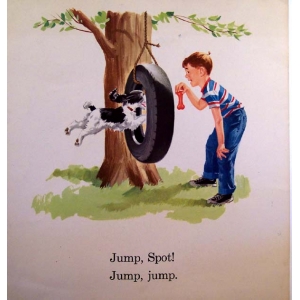 Human to Human Non-Verbal Discourse
Now, if I get into a physical fight with a person, I submit to you that this is a discourse and we will create a text as a result. To be very concrete about it let us say that the resulting "text" is a series of cuts on each other, scuffs on the dirt and maybe, just to be extravagant about it, some shed blood on the ground. This is truly a text as we can come by and “read" it and understand meaning, i.e. some sort of fight took place here. Sure, not mind blowing meaning but Dick and Jane books aren't mind blowing texts either.
Human to Animal Non-Verbal Discourse
Now, if I get into a physical fight with a rabid fox, I submit to you that this is a discourse just a surely as the above example and we will create a text as a result. To be very concrete about it let us say that the resulting "text" is a series of cuts on each other, scuffs on the dirt and maybe, just to be extravagant about it, some shed blood on the ground. The result is a text as surely as it is in the above example.
Animal to Animal Non-Verbal Discourse If you accept that a human fighting a human creates a text and that we can substitute a fox for one of the humans and still create a text then why not submit a fox for the other human as well? I submit that the same paragraph could read "if a fox got into a physical fight with a fox. . ." (photograph by Robert Weselmann)
Here’s where we go into the realm of the supposedly “inanimate objects” We have thus far established that two animate objects, both bringing properties, can meet and have an interaction which we will call a discourse. It may be a non-verbal discourse but a discourse none the less. This discourse, like all discourses, will create a text, even if that text is a simple as a few marks on the ground. I ask you to consider the following. "Inanimate" to "Inanimate" Non-verbal Discourse
If wind, in the form of a tornado, has a "fight"or interaction with a landscape, I submit to you that there will be an interaction between the properties of the tornado and the properties of the land. This fits our definition of a discourse. Two physical entities come together, both bringing properties, they interact (discourse) and the result is a text. To be very concrete about it let us say that the resulting "text" is a huge path of destruction. The text on a grand scale simply reads, a tornado came through here.
When humans read this text, they can see the inherent meaning that exists because of that text but also create new meaning based upon it. The text may say this was a very strong tornado, to say that it was an"F5 rating" tornado is to ascribe human meaning and classification on top of existing meaning. The existing meaning was “inherently” there as it was created before we arrived through the natural workings of the dynamic earth.
You could say my argument is, if a tree falls in the woods and no humans are there to see it happen does it still mean something? Of course it does!
A World of Meanings and Texts
In my line of work as a naturalist, everything is a text. There is meaning already existing in those texts. Our discourse of those texts creates further meaning, for sure, but that does not negate the inherent nature of the meaning already there. I hear the meaning in the Phoebe's call, I hear the meaning in the warning call of the chickadee. I see the meaning in cumulonimbus clouds.
Q. Is meaning created or inherent?
The answer is clear.
A. Yes.
Friday, April 20, 2007
Ecological Discourse and the Nature of Meaning


Monday, April 02, 2007
Arizona Birding
What can I say? The birds in Arizona were fantastic. Even Chelsey thought some of them were cool.
When I first arrived in Arizona at the Kierland Villas I took out my binoculars and immediately spotted Great Tailed Grackles, a Green Heron, a bunch of Yellow-Rumped Warblers (Audubon's), Mallards, House Finches, Starlings and a Black Chinned Hummingbird. The birds in bold are new for this year. Here's a shot of Chelsey and I at the Boyce Thompson Arboretum. On Tuesday, Chelsey, and my mom came along as I met up with birder Jane Wicklund for some serious bird nerd fun. There was a threat of high winds that day so we started early and were able to catch some great sightings before it got too windy. Here's my list from that Tuesday.
On the way there I saw a Turkey Vulture and a Gambel's Quail.
As for new birds at the arboretum:
Gila Woodpecker
Pied Billed Grebe
Cooper's Hawk
Inca Dove
Broad-Billed Hummingbird
Anna's Hummingbird
Costa's Hummingbird
Black Phoebe
Vermilion Flycatcher
Bell's Vireo
Verdin
Hermit Thrush
Phainopela
Yellow Warbler
Spotted Towhee
Abert's Towhee
Black-Throated Sparrow
White Crowned Sparrow
Lesser Goldfinch
That's a pretty good list for one day. We saw one other bird that Jane said was a ruby crowned kinglet but since I couldn't verify it I didn't include it on my list. It was fun to watch people from the Pacific Northwest go all crazy about the northern cardinals. They are pretty amazing. I guess we tend to take them for granted.
On the way home from the arboretum I spotted a Killdeer on the side of the road.
Back at Kierland I saw two Golden Eagles flying over the golf course. I also saw Common ravens. When we went to Taliesin West I saw more gila woodpeckers and house sparrows but also a Curve-billed Thrasher which was fun. I went on a short stake-out at the hummingbird feeders by the pool back at Kierland but apparently no one bothers to fill them.
Once the rest of my family went back home, Chelsey and I headed off to Sedona. We stayed at Lo Lo Mai springs. Our cabin was just feet from the springs and the pond it feeds and I had some exciting new species. I immediately zoned in on a completely bizarre looking duck . Turns out it was a Mandarin Duck. They commonly escape from private collections and zoos. It was incredible and seemed to be hanging out with a couple of Wood Ducks. There were a bunch of mallards and a green heron as well.
At the Tlaquepaque shopping area in Sedona I spotted a couple of Cedar Waxwings. In our adventures around the Sedona area we checked out Tuzigoot National Monument which is pretty much a waste of time.
It is as exciting as the photo looks.
There are far more interesting locations where you can see similar things. As far a birds I did add a Brown Crested Flycatcher though I must admit it was a difficult ID. I'm pretty confident though. Far far more exciting was our last day in the Sedona area. I woke up and peeked out the front door to see who was in the pond. To my surprise there was a male Northern Pintail in breeding plumage. Nice.
Here I am ID'ing some Violet-Green Swallows along Oak Creek Canyon.
At Montezuma's Well I saw some great birds and this site was interesting even if you are oblivious to birds. I'd say it is better than Montezuma's Castle and did I mention that it is free? In the "well," which is a limestone sinkhole, I immediately spotted a Cinnamon teal. Marvelous! The color on the male was wonderful. There were some mallards of course as well as a pair of American Wigeons. I spent a good deal of time looking at the swallows and determined they were Northern Rough-Winged Swallows. Trying Chelsey's patience, I ID'd a Rock Wren and then had a nice short conversation about birds with the ranger. She seemed to indicate that the rock wrens and canyon wrens look the same to her but I found that a little hard to believe. In all of the drawings I have, the canyon wren has a very distinct white throat but maybe not in this part of Arizona?
She indicated that a pair of black hawks were in the area but I didn't see them. I also ran out of time to track down a canyon wren. Oh well.
From Montezuma's Well we headed straight to the airport and I watched the entire way for a road runner. Pretty much everyone else in my family has seen one down there but my record of failure continues unbroken now for two years. I guess seeing something like 47 other species of birds makes up for it!
Here's the birds listed out. Only new ones here:
(Lifers are noted with a * 22 species are listed here for the first time)
39-40
Great-tailed Grackle
Green Heron
41-50
Yellow-Rumped Warbler (Audubon's)
Black Chinned Hummingbird*
Gambel's Quail.
Gila Woodpecker*
Pied Billed Grebe
Cooper's Hawk*
Inca Dove*
Broad-Billed Hummingbird*
Anna's Hummingbird
Costa's Hummingbird*
51-60
Black Phoebe*
Vermilion Flycatcher*
Bell's Vireo *
Verdin
Hermit Thrush
Phainopela*
Yellow Warbler
Spotted Towhee*
Abert's Towhee*
Black-Throated Sparrow
61-70
White Crowned Sparrow
Lesser Goldfinch*
Killdeer
Golden Eagle*
Common raven
Curve-billed Thrasher
Mandarin Duck*
Wood Duck
Cedar Waxwing
Brown Crested Flycatcher*
71-76
Northern Pintail*
Violet-Green Swallow
Cinnamon teal*
American Wigeon*
Northern Rough-Winged Swallow*
Rock Wren*
Addendum
When I returned to work on Monday morning I taught down at the Science Museum and they had a spotting scope out so you could look for Peregrine Falcons on the High Bridge power plant smoke stack. I focused and zoomed in the scope and tally ho! There was a bird perfectly perched. That brings the yearly total to:
77
Peregrine Falcon*
Monday, March 05, 2007
Wednesday, February 14, 2007
Saturn
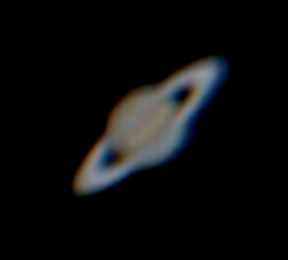
Last night was cold and clear so I finally got outside to do some astrophotography with my telescope. Saturn is a great target this month. The image above is a composite of about 20 images from a quicktime movie captured with a the Phillips SPC900NC web camera I got for my birthday. I stacked and averaged the images to bring out detail. This was my first attempt.
Ideally, once I get the hang of this I'll stack about 200 frames to make final images which should give me greater detail than this. Through the scope with my eyes I could clearly make out the cassini division which isn't visible in the photo. I'm guessing this may be a focusing issue. It is extremely difficult to focus the image and the cold wears my patience thin. Look forward to better images this spring.
I hope you enjoy my first attempt at photographing the ringed planet!
~Kirk
Sunday, February 04, 2007
Vision
A few years back I wrote the following:
1. seeing meaningful vision/values based change in youth as the result of powerful outdoor experiences that help them examine life/ecology and self.
I wrote that in response to the question, "What is your number one motivator at work?"
I need to re-examine everything I do. I've lost sight of this a little over the years as what I do becomes more about work and less about a vocation. How do I create powerful outdoor experiences? I think I'm doing okay with that but what bothers me about my current work is that it isn't as powerful as the adventure education. When I did adventure ed. I would see life change in hours. When everything went right the kids who left were different from those who came. Usually this shift was about self confidence. Studies show that this new self confidence lasts at least a year but for some kids you see that it will last much longer.
I think the effect is more subtle in any kind of environmental education or natural history program. Insted of a profound difference in how they view themselves, which is so personal, they may have a new appreciation for birds or something like that. That's cool and all but because it isn't really a change in self it isn't as intrinsically powerful.
We tend to teach natural history instead of environmental education. I'm proud of that fact but again, it is easier to see the change in an EE class versus a straight up natural history lesson. I think in truth the two can't be teased apart. I prefer coming at a subject from a natural history approach because I can get the group to fall in love with the subject and then they want to save it instead of telling them they are destroying something when they don't even care about it. If someone is falling in love with something that is a profound personal change that will affect their lives.
Bah. I need to examine all three parts of this but my brain isn't up to the task right now.
That and it is hard to affect change in the world when all of your programs get canceled because there isn't any snow.
~Kirk
Sunday, January 21, 2007
Minnesota Gears up to be #1 in Wind Power
It seems things may really come together this year to reform state policy on renewable energy. In Minnesota, renewable energy means Wind.
As part of the agreement between then Northern States Power (now Xcel Energy) and the state, money went to build the first wind turbines in exchange for being allowed to have dry cask nuclear storage on the banks of the Mississippi at the Prairie Island nuclear power facility. That was a devil's bargan but at least it kick-started the wind industry in the state.
Now, new proposals in the legislature would force utilities to be 25% renewable by the year 2020. The current goal is 10% by 2015. Increasing to 25% means, according to a StarTribune article, "about 5,000 [more] megawatts of renewable generating capacity to Minnesota's electrical grid. Most of it would probably come from an estimated 3,000 new giant wind turbines dotting farm country" According to the same article we're at 6% renewable now. 25% would be the highest state goal in the country.
Reading the Minnesota senate Energy, Utilities, Technology and Communications Committee Update, I see that on January 16th they had an information session with various interest groups presenting. Tucked in at the end was this gem. "Jay Lofgren, Boise Cascade, asked that the committee define renewable energy as broadly as possible and that members not enact a mandate." Hmm, Boise Cascade? The timber company? I read this to mean they want to consider forests a renewable resource and they have plans to turn Minnesota forests into biomass fuel. Someone please tell me I'm wrong.
Also, the cry from industry for there not to be a mandate is pathetic. "We the people" will stop using mandates when industries do the right thing all on their own, which is to say, never.
"The market" has no morals. We, the people of the nation, do and we have government of, by and for the people (with nods to Lincoln) that is there to set a course for the better future we seek to live in.
I'm happy to see the Minnesota legislature is doing just that.
~Kirk
Monday, December 18, 2006
Warner's Woods Without Tom?
 My first day at Warner Nature Center I had a note on my desk from the director Tom Anderson. It read something to the effect of "Off to fulfill my pleistocene hunting heritage." It was a nod to author Paul Shepherd.
In Ecology and Man, Shepherd said, "If nature is not a prison and earth a shoddy way-station, we must find the faith and force to affirm its metabolism as our own---or rather, our own as part of it. To do so means nothing less than a shift in our whole frame of reference and our attitude toward life itself, a wider perception of the landscape as a creative, harmonious being where relationships of things are as real as the things. Without losing our sense of a great human destiny and without intellectual surrender, we must affirm that the world is a being, a part of our own body."
Now, as Tom resigns his position at the reigns so he can pursue other adventures , it is hard to imagine Warner without him because Warner is a part of his being and his being is part of Warner. He has eaten apples of the trees, eaten fish from the lakes and deer from the woods. These things all became part of Tom but it is the experience of place at Warner that has shaped him over these past 29 years into the person he is. Every tree, every boulder, fen, marsh and every hand full of glacial till has subtly shaped his life and as such, Tom is as much a part of this land as this land is a part of him.
His relationship to the land and to us is just as real and as valued as the physical materials that make up the whole.
It is hard to imagine Warner without Tom because in many ways they are in unison. They always were, are now and will forever be one and the same. It will be hard to imagine but when the day comes that Tom is not here every day it will, in effect, be a little like my first day. Tom may not be here physically but his influence and presence will be here even when he is out in other wild places.
You cannot truly remove Tom from Warner because you cannot remove a person from themselves.
~Kirk
Friday, October 13, 2006
Happy Friday the 13th
Earlier this week a child at work wrote a poem about a tree. Unfortunately I don't have his name because he's a brilliant poet. Here goes.
Tree Huger
Today I huged a tree
Witch was kwit a glee
It was 150 years old
It had tree mold
Love that tree
~Kirk
Wednesday, August 09, 2006
Israel creates major oil spill/blocks clean-up
 Here's a horrible story the mainstream media has seen fit to pretty much ignore. the short version is that when Israel bombed Lebanon they caused a huge oil spill and their blockade is preventing the clean-up of this environmental catastrophy. Ain't war grand?
National Geographic also ran a story about it.
~Kirk
Wednesday, July 05, 2006
The Curse May Be Lifting
It had been a while since I had seen a new bird but I recently added three birds in three days. No, none of them were the Indigo Bunting.
I set out for a canoe trip on the St. Croix river and what at first looked like a pair of eagles flying together turned out to be a pair of Sandhill Cranes. I'd heard them many times this year but this wa my first sighting.
At the first campground I heard a song that I knew I should know. It was Sweet Sweet oh so Sweet. Or something aproximating that. I spotted a yellow bird on a branch and the binoculars revealed the beautiful red streaks on the breast of a male Yellow Warbler. Wonderful.
At the next campsite at Goose Creek I heard a similar song to the yellow warbler but it was slightly different. I got a great look at the underside of a bird sitting directly above me but that didn't help too much. Finally a pair of birds flew past. One was yellow and black while the other was orange and black. They were American Redstarts. Absolutely beautiful. The Sibley guide doesn't do them justice.
So, gentle readers, that brings my count up to 89. Here I sit on the cusp of 90. What will it be? how long can the indogo bunting elude me?
Sunday, June 11, 2006
83-86
Okay, here are birds 83-85.
83 was kind of a gimme. It was the house finch. I'd seen them already this year but they weren't on my list since I wanted to take some time to really look at them.
84 was a fun one. The mourning warbler. Warblers are fun birds. Tom Anderson actually helped me out on this one. He heard the bird and I assumed it was an ovenbird. Their calls are similar. He assured me it was something different. It was hard to spot him as he was at the top of a tall aspen. We spotted him eventually and made the positive ID with the yellow body and executioners hood. Cool bird.
85 I'm going to go ahead and count the Great-Crested Flycatcher. I didn't have my binoculars with me but I got a good view anyhow. WEEP! WEEP!
86 This was kind of a disappointing one. It was a Belted Kingfisher. This is the local version of the Cookaburra of Austrailian song fame. I just caught a glimpse of it on a telephone wire on the way to work. There is nothing else it could have been so it counts but I wish I could have stopped to get a better look. Maybe some other time. They are beautiful birds.
Still no sighting of an indigo bunting for me. Soon hopefully.
~Kirk
Monday, May 29, 2006
Pileated

I took this great photo just the other day of a pileated woodpecker. Pileated are the largest woodpecker in Minnesota and, if you don't count the Ivory Billed Woodpecker, they are the largest in North America. These guys are huge. They have a wingspan of 29 inches! This one got caught in a bird mist net at the nature center and a bird bander is actually holding the bird. My telephoto lens isn't that good! Catching a pileated in a mist net isn't unheard of but it is notable. They caught one last year as well but it had been three years before that when the last one was caught.
You can tell this is a male because of the bold red line under his eye. Both males and females have the red crest but the line is unique to the males. Though clearly alarmed (his crest is sticking up) he was pretty docile in the hand. That huge beak could do some serious damage to your hands but luckily he took it all well.
~Kirk
Thursday, May 25, 2006
I'm an Octabirder
I thought I'd take a minute at lunch here to say that I have now pushed into the 80s in my quest to see how many wild birds I can ID in one year. Numbers 77-82 were as follows.
Northern Waterthrush
Green Heron
Eastern Kingbird
Song Sparrow
Scarlet Tanager
Chimney Swift
At this point I'm feeling prety good about breaking 100. I'm planning on going to Norway this fall so that should help me add a slew of birds! Still, it will be interesting to see how many birds I can spot at Warner, In Minnesota, In North America and finally internationally.
~Kirk
Tuesday, May 23, 2006
Birding the St. Croix
Here are some good (mostly public) birding sites in the St. Croix Valley from North to South.
Wild River State Park
Interstate Park
William O'Brien State Park
Big Marine Park Reserve
Arcola Mills
Warner Nature Center
Square Lake Park
Pine Point Park
Lake McKusick
Belwin Nature Center
Lake Elmo Park Reserve
Willow River State Park
Afton State Park
Kinnickinnic State Park
St. Croix Bluffs Regional Park
Cottage Grove Ravine Regional Park
Point Douglas Park
Carpenter Nature Center
Tuesday, May 16, 2006
Got the Spirit of '76
The list keep on growing. Yesterday I saw a Baltimore Oriole. On the drive to work today, I spotted an Eastern Meadowlark near the corner of Co. Rd. 4 and Co. Rd. 15 (Manning Ave). It was classically sitting on a fence post. I am about 90% sure I saw a great crested flycatcher but because I didn't have my binoculars and i am not %100 on their call I am not going to count it. I took a hike while I ate my lunch and got a good look at a field sparrow. I have heard them many times but this was the first time I have gotten a really good view. I had 7x35 bincular on a pair of them from about 10 feet away. They are prettier than the drawings in the Sibley book.
In a cool development, someone spotted a red headed woodpecker long Norell Ave about one mile from the nature center. I spotted a read headed woodpecker my first year here and everyone thinks I am crazy. I know where this one was spotted so I have my eyes open every day.
~Kirk
Saturday, May 13, 2006
More Birdies
So, I posted that I am at 70 birds. Later that same day I spotted a male Common Yellow Throat so makes that 71. I also spotted an American Kestrel. Weird I commented on spotting one back on my March 27th post but didn't include it in my list. So, I'm at 72. I then remembered that I have, of course, seen Pigeons. So, 73 birds. I only have 27 more birds to go.
If I had to predict I'd say I hope to see the following. (In no particular order)
Belted Kingfisher
Chimney Swift
Indigo Bunting
Stellar's Jay
Eastern Meadowlark
Green Heron
Brown Thrasher
House Finch
Blue Winged Teal
House Wren
Baltimore Oriole
Scarlet Tanager
Ruby Throated Hummingbird
Wood Thrush
Song Sparrow
Swamp Sparrow
Ovenbird
Trumpeter Swan
Snowy Owl
Grey Catbird
Ring Billed Gull
Sandhill Crane
Black and White Warbler
That would only take me to 97. If I get these what will the other 3 be?
~Kirk
Thursday, May 11, 2006
And then there were 70.
I just had to post this. I remembered today that I saw a common raven in Arizona in March and that wasn't on my list. I then got a pretty good look at a common grackle on the way to an outreach program so I could finally scratch it off my list. I mentioned to Paul that I was at 69 and he told me to go look at the feeders because people were seeing Rose Breasted Grosbeaks all day. I strolled across the building only to discover the only visitor at the feeders was a red squirrel. Paul swore they had been seen and headed back to the office. Just as the door closed behind him a male Rose breasted grosbeak gently landed on the wire holding up the string of feeders.
Seventy birds and counting.
~Kirk
Tuesday, May 09, 2006
Counting Birds
I thought I'd already started this list here but apparently not. I've decided to see if I can spot 100 different birds this year. My fellow naturalist Paul Smithson is currently ahead in the standings.
Here is my bird list thus far. I spotted the barred owl and barn swallow today so I am now at 67.
Black throated sparrow
Great tailed grackle
Killdeer
Great egret
Great blue heron
Mallard duck
Violet green sparrow
Mourning dove
White crowned sparrow
Gambel's quail
Verdin
Great horned owl
Cactus wren
Curve billed thrasher
Cliff swallow
White breasted nuthatch
Ruby crowned kinglet
Western Bluebird
Yellow rumped warbler (Audubons)
Anna's hummingbird
Common Goldeneye
Common loon
Wood duck
Wild Turkey
Red bellied woodpecker
Downy woodpecker
Hairy woodpecker
Brown creeper
Northern cardinal
American robin
Blue jay
American goldfinch
Dark eyed junco (slate colored)
Pileated woodpecker
Black capped chickadee
Purple finch
Red shouldered hawk
Bald eagle
Hermit thrush
American crow
Eastern Phoebe
Cedar waxwing
European starling
Bufflehead
Ring necked duck
Canada goose
House sparrow
Fox sparrow
Turkey vulture
Hooded merganser
Ring necked pheasant
Brown headed cowbird
Tree swallow
Yellow bellied sapsucker
American coot
Osprey
Red tailed hawk
Eastern bluebird
American woodcock
Eastern Towhee
White throated sparrow
Tufted titmouse
Red breasted nuthatch
Yellow rumped warbler (Myrtle)
Chipping sparrow
Barred owl
Barn swallow
What will be next? If I had to guess I'd say I'm due to see a sandhill crane, an oriole, an ovenbird and if I actually stepped outside and looked I could hunt down a grackle, song sparrow and field sparrow. Weirdly I also haven't seen a house wren. I guess I just need to look. I've heard a bunch of other birds but those don't count.
~Kirk
Tuesday, April 19, 2005
Where Bears Belong
Today is a day for blogging.
On the way to work today I heard on the news that a black bear that had been wandering around the northern suburbs and sleeping in trees was shot by a conservation officer. What I found most disturbing was the quote from the officer. ""We wanted to let him go back where he belongs, but he kept moving further south on us,'' said John Hunt, DNR East Metro supervisor.
Yes, that's right. "Where he belongs." Clearly wild animals have no place with humans. Nature is all great when it does what we tell it to. Listen, if the bear was in Roseville or White Bear Lake then that is where it belongs. I don't move to Duluth and then go, "Oh my! There are BEARS here? Let's kill them all. I mean, I LIVE here!"
They decided to kill the bear (instead of moving it) because it had no fear of humans. Yes, yes, we like to kill animals that don't fear us eh? Nature is all good as long as we can control it.
Mark LaBarbera, DNR director of communications, elaborated, "We gave him five days to leave, and he just wouldn't. It's crazy he stayed around.''
Crazy indeed.
~Kirk
Tuesday, March 05, 2002
Snow. Big fat flakes are falling out my window. By reading these posts you'd get the impresion there has been a lot of snow this winter. There has been almost none.
I’m stuck behind my desk taking a little break from writing curricula. I’ve been thinking lately about the role of environmental education. A few weeks back we had a focus group at the nature center. We’re having focus groups with kids, community organizations, businesses, volunteers and parents. We’re hoping to get some ideas for our new five year strategic plan. The outcome will hopefully be a better idea for some new directions we can take. I can in one morning and the flip chart sheets were still stuck to the wall as our director typed them into his lap top computer.
One note in particular caught my eye. Question number one was "What do is the role of a nature center in the community?" Written down as an answer was something to the effect of "create activists?" I pointed it out to the director and ask about it. At that moment another naturalist walked by. The director said that he wrote it down but it seemed to be a question in the minds of the participants. He asked the other naturalist what she thought. "Absolutely not." she replied, "We teach science and it is up to the kids to make their own conclusions and decisions." The director agreed.
I didn’t push the issue at the time but it has been bothering me. We enjoy a reputation in the community as an unbiased science based organization that can provide information to the public. That’s fantastic. The problem is that when you understand the science behind the environmental issues facing us today it is impossible to not be biased. Mercury is poison. DDT destroys the raptor population. Overpopulation causes environmental degradation. This is what science teaches us. So, we are faced with issues important to the survival of the planet. We have the backgrounds in science and we understand the connections. I am not going to stand in front of an audience and say, here’s the facts, oh, but it is up to you to decide if this is bad or not.
With what I know it is unconscionable to teach this material as though it is fact with a non-value laden response. Part of environmental education needs to be value based education. We teach the value of a healthy functioning ecosystem.
Is that a bias? Sure, is there anything wrong with that? I submit not. This isn’t the main issue here however. Is it our job to create activists. If it is not our job, then environmental education is a complete waste of time. We teach with the hope that those we teach will take action on what they learn. Taking action upon knowledge is activism. This is where some may disagree.
They think of activism as some radical path. They see activism as a vocation where all you do in the world is be an activist. There are very few people like this out there. In reality the people most often thought of as activists actually make their living as community organizers, authors, etc.
We in the field of environmental education need a profound redefinition of activism. I submit that if our students fail to take action. All too often we do not teach action. We teach facts, figures, relationships, shapes, patterns, trends, in short, everything but action. Do we really live in fear of action?
We teach kids how to turn of faucets while brushing their teeth. We have just taught activism. We teach kids how to write their legislator asking for clean drinking water this is activism too yet we have somehow crossed a line. Heaven forbid we teach kids how to act upon the science we teach to actively make the world a better place. We wouldn’t want to teach our kids how to ask for clean water now would we?