I took this great photo just the other day of a pileated woodpecker. Pileated are the largest woodpecker in Minnesota and, if you don't count the Ivory Billed Woodpecker, they are the largest in North America. These guys are huge. They have a wingspan of 29 inches! This one got caught in a bird mist net at the nature center and a bird bander is actually holding the bird. My telephoto lens isn't that good! Catching a pileated in a mist net isn't unheard of but it is notable. They caught one last year as well but it had been three years before that when the last one was caught.
You can tell this is a male because of the bold red line under his eye. Both males and females have the red crest but the line is unique to the males. Though clearly alarmed (his crest is sticking up) he was pretty docile in the hand. That huge beak could do some serious damage to your hands but luckily he took it all well.
~Kirk
Monday, May 29, 2006
Pileated


Friday, May 26, 2006
Morning Music
This morning I pulled an old gem out of my CD case. I picked out the classic 1983 Midnight Oil album 10, 9, 8, 7, 6, 5, 4, 3, 2, 1. This has always been one of my favorites for the raw emotion of the songs. I'm always a little surprised how fresh the lyrics seem. You'd think the world would be capable of just a little change in all these years. This verse, from the song, US Forces, always seems relevant, maybe even more so today.
Us forces give the nod, it's a setback for your countryThe full lyrics to the song Read About It are some of my favorite though.
Bombs and trenches all in rows, bombs and threats still ask for more
Divided world the cia, who controls the issue
You leave us with no time to talk, you can write your assessment
The rich get richer, the poor get the pictureAs I begin the work day one line from Tin Legs and Tin Mines keeps ringing in my head.
The bombs never hit you when you're down so low
Some got pollution, some revolution
There must be some solution but i just don't know
The bosses want decisions, the workers need ambitions
There won't be no collisions when they move so slow
Nothing ever happens, nothing really matters
No one ever tells me so what am i to know
You wouldn't read about it, read about it
Just another incredible scene, there's no doubt about it
Hammer and the sickle, the news is at a trickle
The commissars are fickle but the stockpile grows
Bombers keep acoming, engines softly humming
The stars and stripes are running for their own big show
Another little flare up, storm brewed in a tea cup
Imagine any mix up and the lot would go
Nothing ever happens...
You wouldn't read about it, read about it
One unjust ridiculous steal, ain't no doubt about it
You wouldn't read about it, read about it
Just another particular deal, there's no doubt about it
" Who's running the world today?"~Kirk
Thursday, May 25, 2006
I'm an Octabirder
I thought I'd take a minute at lunch here to say that I have now pushed into the 80s in my quest to see how many wild birds I can ID in one year. Numbers 77-82 were as follows.
Northern Waterthrush
Green Heron
Eastern Kingbird
Song Sparrow
Scarlet Tanager
Chimney Swift
At this point I'm feeling prety good about breaking 100. I'm planning on going to Norway this fall so that should help me add a slew of birds! Still, it will be interesting to see how many birds I can spot at Warner, In Minnesota, In North America and finally internationally.
~Kirk
Tuesday, May 23, 2006
Birding the St. Croix
Here are some good (mostly public) birding sites in the St. Croix Valley from North to South.
Wild River State Park
Interstate Park
William O'Brien State Park
Big Marine Park Reserve
Arcola Mills
Warner Nature Center
Square Lake Park
Pine Point Park
Lake McKusick
Belwin Nature Center
Lake Elmo Park Reserve
Willow River State Park
Afton State Park
Kinnickinnic State Park
St. Croix Bluffs Regional Park
Cottage Grove Ravine Regional Park
Point Douglas Park
Carpenter Nature Center
Tuesday, May 16, 2006
Got the Spirit of '76
The list keep on growing. Yesterday I saw a Baltimore Oriole. On the drive to work today, I spotted an Eastern Meadowlark near the corner of Co. Rd. 4 and Co. Rd. 15 (Manning Ave). It was classically sitting on a fence post. I am about 90% sure I saw a great crested flycatcher but because I didn't have my binoculars and i am not %100 on their call I am not going to count it. I took a hike while I ate my lunch and got a good look at a field sparrow. I have heard them many times but this was the first time I have gotten a really good view. I had 7x35 bincular on a pair of them from about 10 feet away. They are prettier than the drawings in the Sibley book.
In a cool development, someone spotted a red headed woodpecker long Norell Ave about one mile from the nature center. I spotted a read headed woodpecker my first year here and everyone thinks I am crazy. I know where this one was spotted so I have my eyes open every day.
~Kirk
Saturday, May 13, 2006
More Birdies
So, I posted that I am at 70 birds. Later that same day I spotted a male Common Yellow Throat so makes that 71. I also spotted an American Kestrel. Weird I commented on spotting one back on my March 27th post but didn't include it in my list. So, I'm at 72. I then remembered that I have, of course, seen Pigeons. So, 73 birds. I only have 27 more birds to go.
If I had to predict I'd say I hope to see the following. (In no particular order)
Belted Kingfisher
Chimney Swift
Indigo Bunting
Stellar's Jay
Eastern Meadowlark
Green Heron
Brown Thrasher
House Finch
Blue Winged Teal
House Wren
Baltimore Oriole
Scarlet Tanager
Ruby Throated Hummingbird
Wood Thrush
Song Sparrow
Swamp Sparrow
Ovenbird
Trumpeter Swan
Snowy Owl
Grey Catbird
Ring Billed Gull
Sandhill Crane
Black and White Warbler
That would only take me to 97. If I get these what will the other 3 be?
~Kirk
Thursday, May 11, 2006
And then there were 70.
I just had to post this. I remembered today that I saw a common raven in Arizona in March and that wasn't on my list. I then got a pretty good look at a common grackle on the way to an outreach program so I could finally scratch it off my list. I mentioned to Paul that I was at 69 and he told me to go look at the feeders because people were seeing Rose Breasted Grosbeaks all day. I strolled across the building only to discover the only visitor at the feeders was a red squirrel. Paul swore they had been seen and headed back to the office. Just as the door closed behind him a male Rose breasted grosbeak gently landed on the wire holding up the string of feeders.
Seventy birds and counting.
~Kirk
Tuesday, May 09, 2006
Counting Birds
I thought I'd already started this list here but apparently not. I've decided to see if I can spot 100 different birds this year. My fellow naturalist Paul Smithson is currently ahead in the standings.
Here is my bird list thus far. I spotted the barred owl and barn swallow today so I am now at 67.
Black throated sparrow
Great tailed grackle
Killdeer
Great egret
Great blue heron
Mallard duck
Violet green sparrow
Mourning dove
White crowned sparrow
Gambel's quail
Verdin
Great horned owl
Cactus wren
Curve billed thrasher
Cliff swallow
White breasted nuthatch
Ruby crowned kinglet
Western Bluebird
Yellow rumped warbler (Audubons)
Anna's hummingbird
Common Goldeneye
Common loon
Wood duck
Wild Turkey
Red bellied woodpecker
Downy woodpecker
Hairy woodpecker
Brown creeper
Northern cardinal
American robin
Blue jay
American goldfinch
Dark eyed junco (slate colored)
Pileated woodpecker
Black capped chickadee
Purple finch
Red shouldered hawk
Bald eagle
Hermit thrush
American crow
Eastern Phoebe
Cedar waxwing
European starling
Bufflehead
Ring necked duck
Canada goose
House sparrow
Fox sparrow
Turkey vulture
Hooded merganser
Ring necked pheasant
Brown headed cowbird
Tree swallow
Yellow bellied sapsucker
American coot
Osprey
Red tailed hawk
Eastern bluebird
American woodcock
Eastern Towhee
White throated sparrow
Tufted titmouse
Red breasted nuthatch
Yellow rumped warbler (Myrtle)
Chipping sparrow
Barred owl
Barn swallow
What will be next? If I had to guess I'd say I'm due to see a sandhill crane, an oriole, an ovenbird and if I actually stepped outside and looked I could hunt down a grackle, song sparrow and field sparrow. Weirdly I also haven't seen a house wren. I guess I just need to look. I've heard a bunch of other birds but those don't count.
~Kirk
Sunday, April 23, 2006
Recovery
I'm about 90% recovered from my hard drive crash. I now have most of my data back but it will be a week or so before I get the actual computer back with a new hard drive. I am so thankful that I have my writing as well as my cartoon drawings. I am working on an online flash cartoon in the evenings and many hours go into making each character, set, vehicle, sound, etc. Here's a gem I'm thankful to have saved.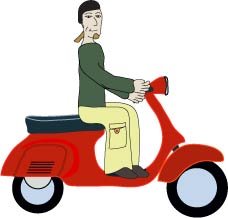 ~Kirk
~Kirk
Tuesday, April 18, 2006
Feminine side
While eating lunch the other day I noticed the title of the feature article in the Utne Reader. It was : "Embrace Your Feminine (You too, guys)"
The title immediately sent up my hackles as it reminded me of a moment back in high school.
It was the end of my junior year as I stepped into the gymnasium to pick up my yearbook. In the past, our yearbooks had just been delivered to our classroom but this year was different. People enjoyed this new distribution method as it was a great opportunity to see a lot of people and get them to sign your book. At one point I ran into my friend Steve. Steve was a senior and a guy I looked up to. We hadn't really had a huge amount of time to spend together that year but we'd done some cool things and had some great conversations. It was too bad that he was a senior and I was a junior because he was going off to college and inevitably we'd not be able to have those great conversations and share ideas on music, the universe and everything. While this wasn't the last day of school it was very close and signing a person's yearbook brings a kind of closure. We talked for a little while and then said, "see you around," knowing that wouldn't be the case. We gave each other a hug, which was not unusual for my group of friends and that's where the story really begins. One of our female friends who was standing around saw us hug each other goodbye and said something to the effect of, "It's so great to see men comfortable expressing their feminine side."
We were both taken aback by this statement and it turns out we were both thinking the same thing. You see, women want sensitive men. They want us to express ourselves. They want us to be in touch with our feelings and emotions, as well as the feelings and emotions of others. This is not something I work on. My Meyers-Briggs profile is INFP. I am Intorvert, iNtuitive, Feeling, Perciever. (Thank Dog I wasn't raised Catholic or I'd be full of self hatred.) It is in my nature to exhibit characteristics some are so quick to label, "feminine."
Herein lies the problem. To label actions feminine and masculine is to assign them to a specific gender. These are the things men do and these are the things women do. Women want men to show their emotions but when they do, the women then label those actions "feminine" i.e. something that is contrary to the very nature of what a man is.
Is it any wonder men don't want to show emotions when women label men as feminine for doing so?
You can't have your cake and eat it too women. If you want men to show that they are in touch with their feelings and if you want them to express their emotions then you need to give up on the monopoly and stop calling these things feminine.
Imagine this, a woman friend applies for a job as a corporate CEO (traditionally a male role) and I say to her, "Hey, it's good to see you showing your masculine side." I would guess I would no longer be able to count her as a friend. The statement is totally offensive.
Is it really any different when women comment on men "showing their feminine side?"
Saturday, April 15, 2006
Lenticular
Last night Chelsey and I had a discussion about the definition of some words. She claimed she had seen authors using "sorites" to mean party. The correct term would be soirees. This all came up because we couldn't remember the name of an episode of Firefly. I remembered the next day that is was Shindig. Oh well. I looked up sorites as she spelled it and was confused even more because I was confusing sorites with sorties. Ah language.
I continued to flip though the dictionary amusing myself when I came upon the word lentil. Of course a lentil is a small pea like seed we eat. Close by in the dictionary, I spotted the word lenticular. Of course, lenticular, which I always associate with lenses actually means "shaped like a lentil". The word lens comes from the word lenticular. So, the lenses in my glasses and telescope eyepieces are actually named lenses because they resemble a lentil.
Weird. I never knew.
~Kirk
Monday, April 10, 2006
Timberdoodle Twirl
(Note: This appeared as my April "Au Naturel" column in Stillwater Living Magazine)
I remember being nervous in high school as I waited to be asked to the Valentine's day "sweetheart" dance. Not being asked was my girlfriends subtle way of setting me free. I spent the evening with a friend driving to Darwin, Minnesota to see the biggest ball of twine in the world. I've perhaps been skeptical of dances ever since.
Now, later in life and as a professional naturalist, I think about one dance in particular as I prematurely take off layers of wool and don shorts on fifty degree days. The signs of spring tell me it is time for the Timberdoodle Twirl.
The Twirl, a.k.a. the Sky Dance, is a secretive event that only occurs in the spring. Naturalists have attended the twirl for centuries and yet it remains a little known event to most outsiders.
You will not be invited to the Twirl. There are no invitations and no awkward propositions. You don't need to trek to the giant twine ball when you're not invited to the dance.
If you want to attend the Timberdoodle Twirl you need to first figure out where it is held. If you are lucky enough to know someone who has been to one in the past then you have an easy in. The only other option is to hunt down the location on your own.
Although locations do change, the Twirl often takes place in the same spot for generations. Timberdoodle Twirls are usually situated on the edge of meadows. There must be enough room to twirl. There must also be a woods nearby with young trees such as aspen and alders. A stand of sumac may work in a pinch. It all depends how picky the dancers are.
The Timberdoodle Twirl is an elaborate dance that can only be performed by the highly experienced and rules dictate that it can only be performed in the dying rays of twilight. A full moon rising in the east makes it all the better. Dim lighting sets the mood. The Twirl is about one thing; bonding with hopes of mating.
If you think you're up to participation in the Twirl keep in mind that none of the naturalists are. There are two requirements. To perform in the Timberdoodle Twirl you must first off be a male. This precludes half the population but you must also be able to flap your arms hard enough to fly. This tends to rule out the rest of us.
To actually take part in the Timberdoodle Twirl, you must be a timberdoodle. The males of this strange slightly spherical species perform an elaborate mating dance we naturalists call the Timberdoodle Twirl or the Sky Dance. The timberdoodle, also known as the American woodcock, is a secretive bird that spends most of its time in the woods probing the ground with a ridiculously long beak. Technically, the woodcock is a shorebird but with the beaches being such historically crowded places who can blame it for preferring the solitude of the woods?
In the woods, the sensitive beak searches the earth for worms and insects. With eyes on the sides of its head it can see both in front of and behind itself at the same time. It can also see above itself, which is useful for keeping an eye on both predators and dancers.
Any evening, April through May, you may have luck discovering the secret dance of the timberdoodle. As the sun sets, listen for the buzzy "peent" call of the male bird. It shouts to the females, "Look at me, I am about to dance." This is personally a declaration I have never shouted on a dance floor so I admire the bird's self esteem.
After a few minutes of peenting, the male soars two hundred feet or more into the sky. The spiraling skyward travel is accompanied by a twittering sound produced not from the throat of the bird but by air rushing over the wings. If you approach from the east you can see the bird silhouetted against the dying rays of the day.
The bird then sings a dreamlike courtship song in a liquidly warble while beginning a leaf-like fluttering descent to the earth. It goes silent a few feet from the ground and alights gently on the dance floor.
Upon landing, he immediately starts up with the peents again, trying to call in a female to watch his elaborate dance.
The springtime ritual of the Timberdoodle Twirl probably occurs near your home. Visitors to Lake Elmo park have seen it and Warner Nature Center offers a guided Timberdoodle Twirl program each spring.
When you discover the secret location of the Timberdoodle Twirl, hold that information dear. You are witness to a marvel seen by few. Remember though, unless you can fly, you'll be asked to sit this dance out.
Sunday, April 09, 2006
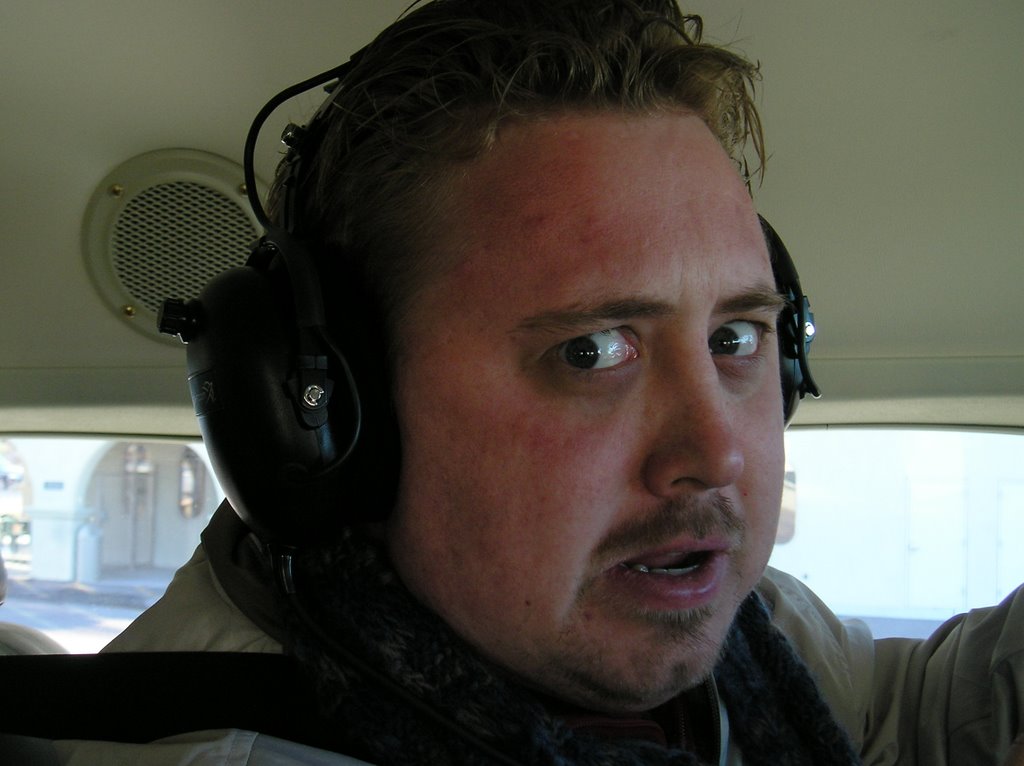
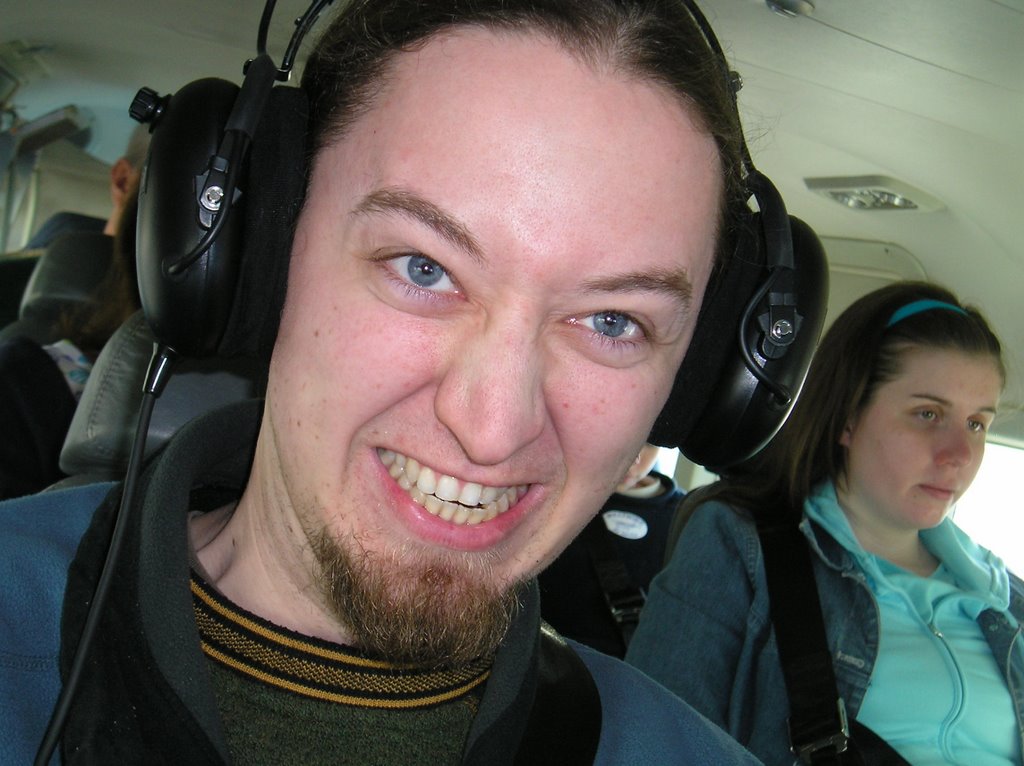
Would you fly with these men?
  |
Thursday, April 06, 2006
Frogs
Just a quick note here. Eariler this week I heard the first frogs of the year. The western chorus frogs started first at the east end of the bog. Yesterday as I left work the wood frogs were finally singing as well. What a change in just a few days! The "peeper pond" as we call it was full of life yesterday when it was frozen just a few days ago. Julie, who left work about an hour and a half after me claims she heard spring peepers as well.
~Kirk
Friday, March 31, 2006
Recovering from Winter's Crash
(FYI: A version of this appeared in The St. Croix Valley Press. They edited the last paragraph so it no longer made sense. Ah the joy of being edited.)
This week, an abundance of new sounds appeared at Warner Nature Center. We’ve begun to hear the calls of new spring arrivals such as cardinals, robins, red-winged black birds, Canada geese and sand-hill cranes. We’ve also heard winter residents such as the black-capped chickadee and the American goldfinch as they begin their spring songs.
A new song joined the spring chorus yesterday. It was most unexpected and unwelcome. Though it resembled the sharp loud cherr of an agitated squirrel, it was actually the sound of my computer’s hard drive self-destructing. All of the data stored on it was lost in an instant. I am trying really hard to not feel completely sick about this. I lost a lot of my writing including an entire year's worth of articles I wrote for 2006-2007 issues of The Interpreter.
Winter is the great hard drive crash of the world. In the cold dim light of winter, everything either slows down or stops completely. As a naturalist, I am amazed by the diversity in nature. This annual sub zero crash is handled in many different ways. Some birds and mammals decide to tough out winter by staying active. If food runs out, this choice can be deadly.
Other animals, most notably birds, migrate south in search of food as winter approaches. This seems a sensible approach but migration for birds isn’t as simple as hopping a jumbo jet to warmer climes. The migration survival rate varies but it can be a low as 30 percent. Flying south is nature’s way of backing up bird data. When the crash of winter comes, the data in the form of the species genetic diversity, has flown south. With failure rates as high as 70 percent I don’t think flying my hard drive south is a good option in the future.
Another back-up in nature is to protect oneself through hibernation. We think of hibernation as a great way to sleep off winter but hibernation is risky as well. A high percentage of small mammals that go into hibernation never make it back out. They perish underground; silent victims of nature.
If staying, migration and hibernation as so dangerous, how can they be considered a successful way for nature to back itself up for winter’s crash? The answer is abundance. Nature provides for the sheer abundance of individuals within a species so that when faced with mortal challenges such as winter, enough will survive to carry on.
Spring is the season of abundance. It is so clear and welcoming to my winter eyes. That abundance is both the key to and the result of nature’s ability to back itself up. I too made a back up a short while before my computer crashed. I copied my most important files onto a disk. It won't be a perfect back up but it is better than nothing. I may have to load those old files onto a new computer, the songs out my window tell me our Minnesota landscape is being reborn as well.
Monday, March 27, 2006
Spring
I'm crazy swamped this time of year but I thought I should mention some phenology here. I spotted about 50 robins a couple of weeks ago and then in the last few days I have seen geese, American kestrels and red wing black birds. On Saturday the birds were singing spring like crazy. I heard cardinals at my house in the morning and then out at Warner the chickadees and cardinals were going nuts! I heard the chickadees singing "hon-ey, hon-ey" a few times this winter but on Saturday they were screeming "HON-EY, HON-EY!" They were really psyched about the weather. We all were! I also caught a glimpse of the beaver down at the lake.
~Kirk
Thursday, February 16, 2006
Winter Wonderland?
From my tree top office in the woods I can look out over the woods of Warner Nature Center and survey the sights. This past winter I watched toddlers scurry across the snowy back yard and approach the woods. A barrier stood in their way. An enormous wall of snow blocked their passage. They bravely climbed up to the top, and then slid down the other side.
I remember mountains of snow when I was a kid too. I remember snow forts and a magical winter wonderland called Minnesota. As an adult, and as a naturalist who teaches snowshoeing, I lament the lack of snow these days. Is there really a lack of snow though? To the toddlers, the three foot high snow bank left by our site manager's snowplow is enormous. It stands higher than their heads!
Last night I heard on the news that a nor'easter hit the eastern seaboard. It was so large it had an eye like a hurricane. It dropped upwards of three feet of snow. In the new winter storm scale it was a category three of a possible five. This is not Minnesota. We like to think of ourselves as a snowy winter wonderland but are we really just a cold winter wonderland?
I searched the records to be sure. I am a child of the 80s so I looked at the annual snowfall from 1981-1986. The totals were as follows:
81-82 95.0 inches
82-83 74.4 inches
83-84 98.4 inches
84-85 72.7 inches
85-86 69.5 inches
The same data for the past five years reads as follows
00-01- 75.8 inches
01-02 66 inches
02-03 35 inches
03-04 66.3 inches
04-05 25.5 inches
So, I'm not crazy and it wasn't just that I was a lot shorter back then. There was far more snow when I was a kid. The average for those five years at the beginning of the 80s was 82 inches. That's 6.83 feet per year. The average for the past five years has only been 53.72 inches or 4.47 feet per year.
Now, here's the bad news. If you total all the snow data for the past 122 years you find that the annual average snowfall is only 45.8 inches for the twin cities. That's right, three of the past five winters have been above average. The normal total snowfall is only 3.8 feet and keep in mind that that is snowfall, not how much snow actually sticks around.
Total Snowfall this winter as of today: 24 inches.
Saturday, January 28, 2006
Shameless Self Promotion
While searching for friends on blogger I realized no one can find my blog because I only use my first name when I sign my posts.
So, to remedy that problem, I am Kirk Mona. Leave a comment or I will be forced to fustigate you in the head region.
On a seperate note,
Many thanks to my older brother Erik for teaching me words like fustigate.
~Kirk
Friday, January 20, 2006
Space Alive
In my last post I tried to show that space was alive with sound. When we look up at the night sky is seems static, sure it moves but we soon learn that that is largely due to the the motion of the Earth. I present for your enjoyment then two animated clips.
In this animated gif you can watch dust devils dance across the surface of mars. It blew my mind to see images of movement on another planet. Fantastic.
Another view of changing space is this time laspsed clip of star cluster M3. This was compiled over the course of one night. You can really see how the stars change in brightness.
~Kirk
Tuesday, December 27, 2005
The Sound of Silence
While I enjoy a little silence now and then, like when I stand still in a snow covered field on a winter's night, I also enjoy the sound of snowshoes as they crunch crunch crunch their way around a frozen field.
I enjoy the silence as I stare through the eyepiece of a telescope and I enjoy the noise of barred owls calling and coyotes howling as I peer at the stars.
While I enjoy the soundtrack, silence can be thought of as the true sound of space. In the vacuum of space, sound waves cannot travel so silence rules the day.
That's why I was happy when the firefly class ship Serenity silently glided past Reaver ships in the movie Serenity. I'm a science geek at heart and I like my space scenes quiet.
All is not lost though for those who like sounds. We live in a universe of vibrations. More and more, little bits of information come across my desk that have to do with sounds in space. One of the reasons space can seem so cold and boring is that much of it is cold and boring. Sounds excite us.
So, in an effort to make space a little more exciting here are some sounds from space. This is a new field so the offerings are a little meager but keep in mind the first recordings on earth weren't real exciting either.
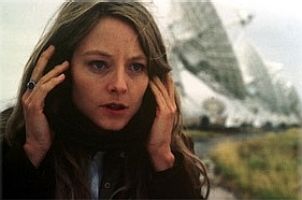
The first sounds from space I ever heard were pulsars. A pattern will become clear soon that all of these sounds are a bit of a tease. You can't really "hear" a pulsar. These are radio waves emitted by spinning stars. A computer turns them into sound for us. I heard sounds like these on TV shows about space as a child and thousands of people heard them in the movie Contact when Jody Foster's character thinks one might be an alien signal early on in the film. In fact, the one linked above sounds a bit like the one in the movie. She says it is J1741+2748 which isn't a real pulsar.
It was years until I heard another sound from space. It was the cassini spacecraft traveling through Saturn's rings. The accompanying animation gives some nice perspective. Millions of tiny particles hit the high gain antenna creating puffs of superheated plasma that the Radio and Plasma Wave Science instrument recorded.
The Cassini spacecraft collected these bizarre radio waves near Jupiter. They sounds like birds. This is an example of a chorus sound caused by radiation belt electrons in a planet's upper atmosphere.
Cassini also recorded the sound of auroras at Saturn.
Check out these weird radio emissions the Galileo spacecraft gathered from Jupiter's largest moon, Ganymede.
This Sound from the Dynamics Explorer Spacecraft that sounds a lot like a transmission from Reavers in the movie Serenity. (Keep in mind this is essentially a sound that the earth makes. Perhaps fitting.)
Here's the sound of the Voyageur 1 spacecraft hitting Jupiter's bowshock. I like the sound of this one. If you want an explaination look here. Keep in mind this is an audio representation of data. This one is cool though because the waves are technically in the audible range so this is closer to actual "sound."
Last two sounds. How about the Big Bang? Or did it sound like this? Technicaly this is the sound of the universe cooling just after the big bang.
The other day I stumbled upon the Planetary Society website and saw that they are attempting to send an actual audio recorder to mars. Now we're talking. Real sound! Unfortunately, they put the recorder on the polar lander which crashed. Now that would have been a sound to record!